Buying new furniture is one of the most exciting parts of decorating a home. You see a beautiful sofa, an elegant bed, or a stylish coffee table and immediately start imagining how good it will look in your room.
But this is also where many decorating mistakes begin.
A piece of furniture can look perfect in a showroom and still feel completely wrong once it arrives at home. It might be too large, the color may clash with your walls, or it may leave so little walking space that the entire room feels smaller.
If you’re planning to buy new furniture, don’t start with the furniture store. Start with the room itself.
Here are some luxury room decoration ideas that can help you create a modern home that looks beautiful without sacrificing comfort.
1. Measure the Room Before You Fall in Love With Furniture
This sounds obvious, but it is surprisingly easy to skip.
Before shopping, measure the length and width of the room. Also note the position of doors, windows, electrical outlets, radiators, and built-in storage.
Then measure the space where you expect each major piece of furniture to go.
A huge sectional sofa might look luxurious online, but if it blocks half the window or leaves a narrow pathway through the living room, it won’t feel luxurious once you live with it.
The same applies to bedrooms. A large king bed can be wonderful, but not if you have to squeeze sideways to reach the wardrobe.
Good luxury design starts with proportion.
2. Choose One Main Furniture Piece First
Instead of buying several pieces at once, begin with the item that will visually dominate the room.
In a living room, that’s usually the sofa.
In a bedroom, it’s the bed.
In a dining room, it might be the dining table.
Once you choose that main piece, use it as the foundation for everything else.
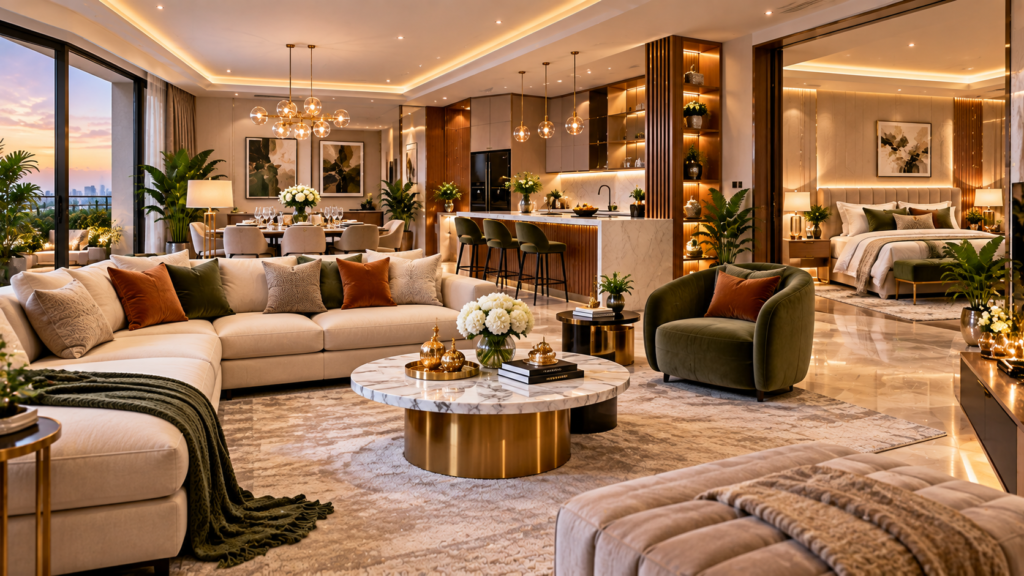
For example, if you select a warm cream sofa with soft curves, you might pair it with a walnut side table, a textured beige rug, and small brass accents.
This approach makes the room feel coordinated without requiring every piece to come from the same furniture collection.
3. Don’t Buy an Entire Matching Furniture Set
Matching sets are convenient, but they can sometimes make a room look more like a showroom than a home.
A modern luxury interior often feels more interesting when different pieces complement one another without being identical.
Imagine a beige upholstered bed with dark wooden bedside tables and brushed-gold lamps. None of these pieces needs to come from the same collection, yet they can still look beautifully connected.
The trick is to repeat certain materials, colors, or shapes throughout the room.
That creates harmony without making everything look copied and pasted.
4. Build Your Room Around a Simple Color Palette
Before choosing furniture colors, decide on three basic layers:
Your main neutral color, your secondary color, and your accent color.
For example:
- Warm white + walnut brown + olive green
- Cream + beige + brushed gold
- Soft gray + natural oak + navy blue
- Taupe + chocolate brown + muted brass
- Ivory + black + warm wood
The largest surfaces should usually carry the quieter colors, while stronger shades can appear through chairs, cushions, artwork, throws, and accessories.
This makes the room easier to update later.
If you become tired of green, replacing cushions is much easier than replacing an expensive green sofa.
5. Let Your Sofa Breathe
Pushing every piece of furniture against a wall isn’t always the best use of space.
If your living room is large enough, bringing the sofa slightly forward can create a more intentional seating zone.
A rug underneath can help define that area.
In an open-plan home, the back of a sofa can even act as a subtle divider between the living and dining spaces.
The goal is to create a furniture arrangement that feels designed rather than simply placed around the edges of the room.
6. Mix Straight Lines With Soft Curves
Modern furniture often features clean, straight lines, which can look sophisticated. But if everything is rectangular—the sofa, rug, coffee table, TV unit, artwork, and cabinets—the room can start to feel rigid.
Introduce a few curved elements.
A round coffee table, curved accent chair, oval mirror, sculptural lamp, or rounded sofa can soften the space immediately.
You don’t need curves everywhere.
One or two carefully chosen pieces can be enough to make a modern room feel warmer and more welcoming.
7. Use Furniture That Does More Than One Job
Luxury doesn’t mean wasting space.
Some of the smartest modern furniture is both attractive and practical.
A beautiful ottoman can provide extra seating and concealed storage. A bench at the end of the bed can hold blankets inside. A coffee table with drawers can hide remote controls and chargers.
In smaller homes, consider nesting tables, storage beds, floating bedside units, and slim consoles.
When clutter has somewhere to go, the room naturally looks more polished.
8. Pay Attention to Furniture Height
People often think about furniture width but forget about height.
A very tall sofa beside a tiny side table can look awkward. An oversized headboard beneath a low ceiling may overwhelm a bedroom.
Try to create visual relationships between pieces.
Bedside tables should work comfortably with the mattress height. A coffee table generally looks better when its proportions relate naturally to the sofa. Artwork should connect visually with the furniture beneath it rather than floating randomly near the ceiling.
These small proportional decisions are often what make professionally designed interiors feel balanced.
9. Add Luxury Through Texture
You don’t need marble everywhere to make a room feel expensive.
Texture can create just as much visual richness.
Pair a smooth wooden table with a soft rug. Add velvet or boucle cushions to a simple sofa. Use linen curtains beside polished furniture. Combine a matte wall finish with subtle metallic details.
A bedroom might use an upholstered headboard, crisp cotton bedding, a knitted throw, and a thick rug—all within a very simple color palette.
The room feels richer because different surfaces react differently to light.
10. Don’t Ignore Lighting When Buying Furniture
Furniture and lighting should be planned together.
Imagine buying the perfect reading chair and later realizing there is no electrical outlet nearby for a floor lamp.
Or placing a dining table somewhere that leaves the chandelier noticeably off-center.
Before finalizing furniture positions, think about where light will come from.
A modern room usually benefits from several sources: ceiling lighting, table lamps, floor lamps, pendants, and sometimes concealed LED lighting.
Warm, layered illumination can make relatively simple furniture look considerably more luxurious at night.
11. Choose a Coffee Table for Your Lifestyle
The most beautiful coffee table isn’t necessarily the right one.
If you have a compact living room, a round table can make movement easier because there are no sharp corners projecting into walkways.
For a larger seating arrangement, two smaller nesting tables can sometimes work better than one enormous table.
If you regularly eat or work in the living room, think about surface height and durability rather than appearance alone.
A home should work for the way you actually live.
12. Make the Bed Look Luxurious Without Overdecorating It
A luxury bedroom doesn’t require a mountain of pillows.
Start with a good bed and an attractive headboard. Add comfortable bedding in a restrained color palette, then introduce two or three decorative cushions and a throw for texture.
That’s often enough.
If you want more impact, invest in the wall behind the bed rather than adding more objects on top of it.
Wood paneling, subtle molding, textured wallpaper, or soft integrated lighting can transform the entire room while keeping the bed practical.
13. Use Rugs to Connect Your Furniture
Furniture can feel disconnected when every item seems to occupy its own little island.
A properly sized rug helps bring the arrangement together.
In a living room, try to have at least the front legs of the major seating pieces sitting on the rug.
In a bedroom, use a rug large enough to extend beyond the sides and foot of the bed.
Very small rugs often make furniture arrangements look smaller and less intentional.
14. Leave Some Empty Space
This may be the cheapest luxury decorating idea of all.
Don’t fill everything.
You don’t need a cabinet on every wall, a chair in every corner, or decorations covering every tabletop.
Empty space allows the furniture you carefully selected to stand out.
It also makes the room easier to clean, easier to walk through, and calmer to look at.
If you aren’t sure what to put in an empty corner, live with it for a few weeks before buying something.
You may discover that the room was better without anything there.
15. Bring Nature Into the Room
Modern furniture can sometimes make an interior feel too controlled.
Plants, natural wood, stone, flowers, and woven materials can soften that feeling.
A large indoor plant beside a sofa can fill an awkward corner without making it heavy. A simple vase of fresh greenery can bring color to a neutral dining table.
Even furniture itself can provide this natural connection. A wooden console or bedside table can add warmth to a room dominated by upholstered and painted surfaces.
16. Think About How the Furniture Will Age
When you’re spending more money on furniture, ask yourself whether you will still like it several years from now.
Highly unusual shapes and very specific trend colors can be exciting, but they may also date quickly.
For expensive pieces such as sofas, beds, dining tables, and wardrobes, timeless designs are usually safer.
You can experiment more with lamps, cushions, artwork, mirrors, side tables, and decorative chairs because these are easier to change later.
17. Don’t Sacrifice Comfort for Appearance
A sofa can look stunning and still be uncomfortable.
A designer chair can photograph beautifully but make you want to stand up after five minutes.
If possible, sit on furniture before buying it. Check the seat depth, back support, cushion firmness, and arm height.
For beds, put comfort ahead of appearance when choosing the mattress.
Luxury should make everyday life better.
If furniture looks expensive but nobody wants to use it, something has gone wrong.
18. Give the Room Something Personal
Once the main furniture is in place, don’t rush to fill the remaining surfaces with generic decorations.
Add things that mean something to you.
Family photographs, books, travel memories, artwork you genuinely enjoy, or an object you’ve owned for years can make a newly decorated room feel established.
This is often the difference between a beautiful furniture showroom and a beautiful home.
Before You Buy, Ask Yourself These Questions
Before paying for a major furniture piece, imagine it inside your actual room rather than inside the showroom.
Ask yourself whether there will still be enough walking space, whether doors and drawers can open properly, whether the furniture works with your existing colors, and whether you genuinely need it.
Also consider how difficult it will be to get the item through your entrance, hallway, staircase, or elevator.
That last measurement has saved many people from an unpleasant surprise.
Final Thoughts
Buying new furniture should be enjoyable, but the best results usually come from planning before shopping.
Measure the room first. Choose one important piece as your starting point. Build a simple color palette around it, mix complementary furniture instead of buying everything as a matching set, and pay attention to lighting, storage, texture, and walking space.
Most importantly, don’t measure luxury by how much furniture you can fit into a room.
A truly beautiful modern home feels luxurious because the furniture is comfortable, the proportions make sense, the colors work together, and there is enough space for everyday life to happen naturally.
Leave a Reply